Procedures
Rhinoplasty
Rhinoplasty is a surgical reshaping of the nose — most commonly reducing or narrowing it, refining the tip or bridge, or straightening a deviation. Combined with septoplasty (straightening of the nasal septum), it can also improve breathing.
About the procedure
Reshaping the nose — for looks and breathing alike
The nose has a defining influence on the whole face — reshaping it can bring both refinement and a more youthful look. That is why rhinoplasty is one of the three most common facial aesthetic operations. Beyond appearance, it often brings a functional benefit too: combined with septoplasty, it can significantly improve breathing in many cases. With proper aftercare, the result is permanent.
It's right for you if…
- you have long been troubled by the size or shape of your nose — typically the bridge, the tip, or its width,
- your nose is deviated, whether from birth or after an injury,
- you find it hard to breathe through your nose and are considering simultaneous septoplasty,
- you are at least 18 years old and your nose is fully developed.
- We do not perform the procedure before the nose has finished developing — the optimal age limit is 18.
Closed or open rhinoplasty
Depending on the correction needed, the operation involves the soft parts of the nose, its bony framework, or both. For most procedures we use the closed technique — the incisions are made inside the nose, so no visible scar remains. For more complex deformities, the alternative is open rhinoplasty, which leaves only a tiny scar on the columella, the strip of tissue between the nostrils.
Augmenting the nose is less common; we also correct post-traumatic deformities. If impaired breathing troubles you as well, the operation can be combined with septoplasty — in many cases, breathing improves significantly.
Before the procedure
It all starts with a consultation
A thorough consultation with the surgeon comes first: the nose is examined in detail — its shape, any deformities, and your breathing. The surgeon explains the course of the operation, the aftercare regimen, and the possible risks, and together you agree on how the nose should look afterwards. The consultation is free and carries no obligation.
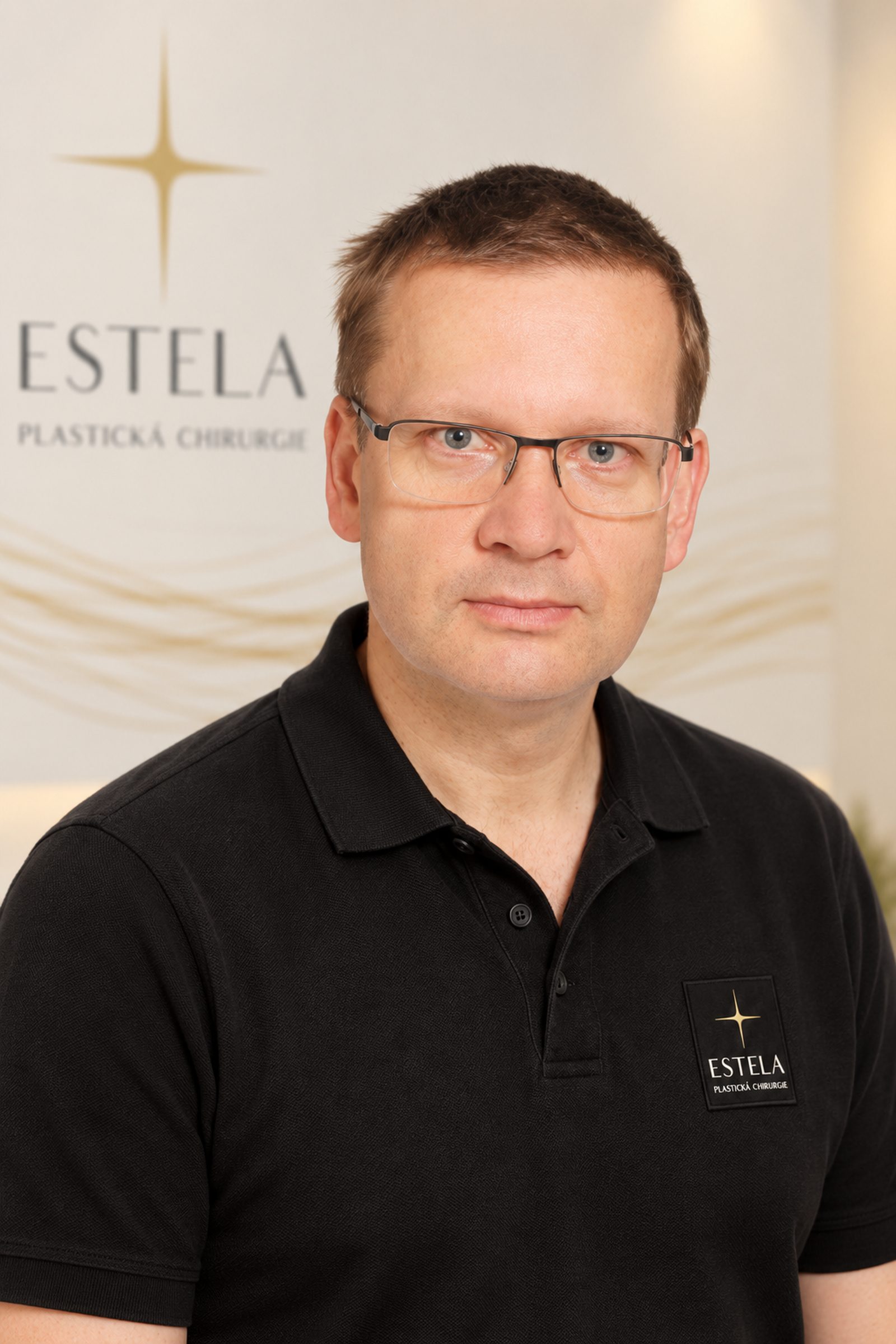
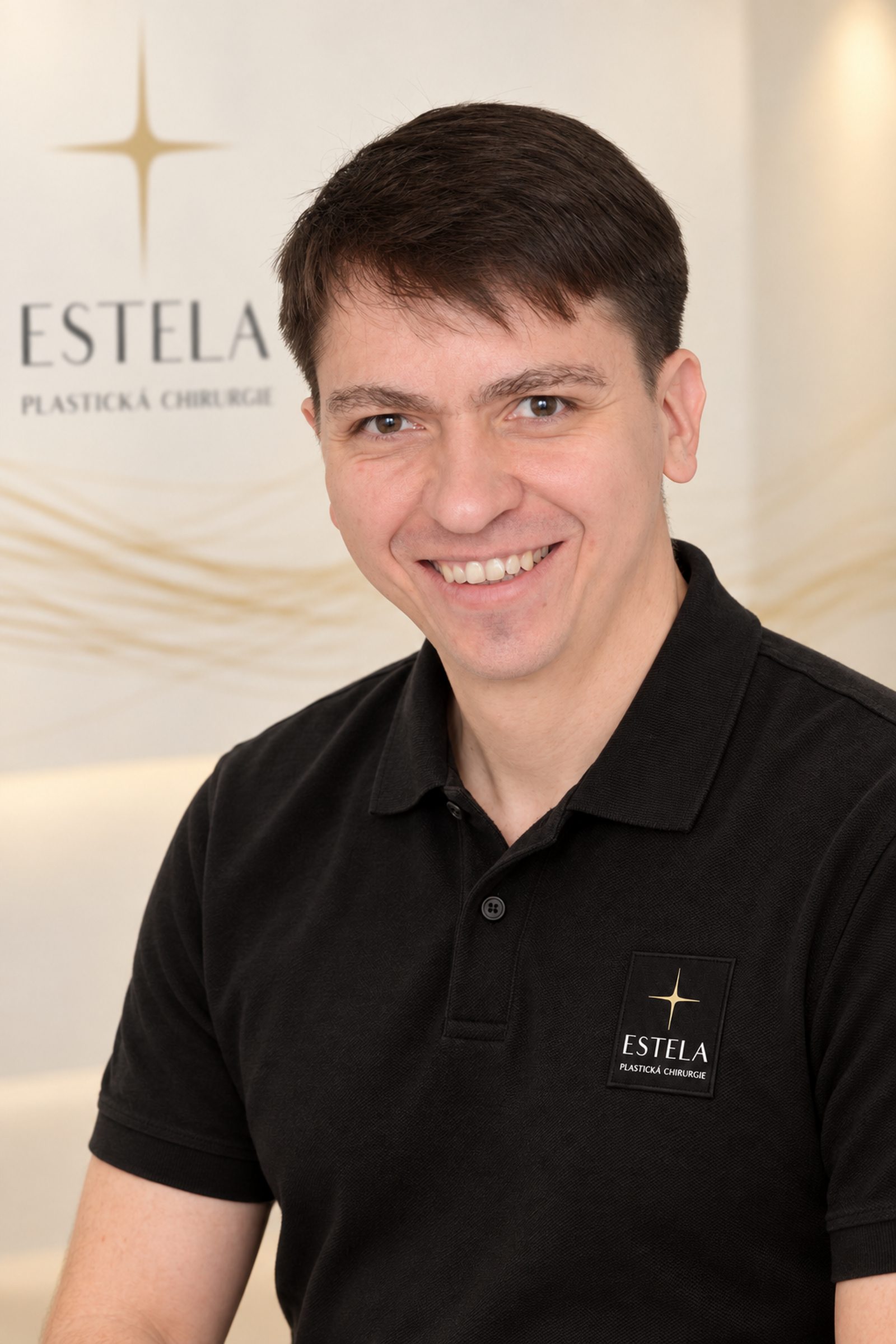
The procedure
Five steps to a new profile
The procedure is performed in the operating room under sterile conditions, under local or general anaesthesia depending on its extent. The operation takes approximately 60 minutes.
- 01
Anaesthesia
Depending on the extent and complexity of the operation, the surgeon chooses local or general anaesthesia. You feel no pain during the procedure.
- 02
Placing the incisions
In closed rhinoplasty the incisions are made inside the nose, so no visible scar remains. For more complex deformities the surgeon uses the open approach, with a tiny scar on the columella.
- 03
Reshaping
The surgeon adjusts the soft parts of the nose and, where needed, its bony framework — most often reducing the tip or bridge, narrowing the nose, or straightening a deviation. If required, septoplasty is performed at the same time.
- 04
Fixing the nose
The operation ends with the nose being secured in a plaster cast and nasal packing — small cotton tubes supporting the nostrils.
Until the packing is removed, you breathe through your mouth. - 05
Heading home
You go home right after the procedure. The packing is removed the following day, the cast after about ten days.
Aftercare
What to expect after the procedure
Day 0
You go home with your nose secured by the cast and nasal packing. Rest with your head elevated.
Day 1
You come in for a check-up, where the packing is removed from your nostrils — breathing gets noticeably easier from then on.
Day 10
The surgeon removes the cast. The small bruises and swelling around the eyes and nose usually disappear within 10–14 days.
Week 2
You return to everyday life — back to work and among people.
Weeks 4–8
After the cast comes off, protect the nose from any knocks for at least 4 more weeks, and from direct sunlight (UV) for at least 8 weeks.
Months 6–12
Subtle swelling of the tip subsides gradually; the final shape of the nose is therefore assessed only once it has fully settled.
Avoid strenuous exercise and contact sports until the surgeon confirms the nose has fully healed — it remains vulnerable in the first weeks. Discuss your return to sport at a check-up.
The nose shapes the look of the whole face — and sometimes every breath you take. Rhinoplasty can improve both.
Pricing
Rhinoplasty pricing
The price is final and covers all costs associated with the operation, including 12% VAT.
- Rhinoplasty 1,770 €
The price includes anaesthesia, the procedure itself, and follow-up check-ups. A no-obligation consultation beforehand is free.
These prices apply to procedures from 1 January 2027. If your procedure is booked for 2026, the price quoted when you booked still applies.
Full price list of all proceduresPossible complications
We speak openly with you
Rhinoplasty is one of the more demanding aesthetic operations. Its risks include post-operative bleeding, infection, temporarily impaired nasal breathing caused by swelling of the lining, and temporarily reduced sensitivity of the nasal tip. Rarely, a slight irregularity or asymmetry may develop.
These risks are minimised by careful pre-operative preparation, a gentle surgical technique, and following the aftercare regimen — above all protecting the nose from knocks and direct sun in the first weeks after the operation.
Two weeks before the procedure
To reduce excessive bleeding, do not take any medicines containing acetylsalicylic acid (aspirin) — such as Acylpyrin, Aspirin, or Anopyrin — for about 2 weeks before the operation.
You need to be in full health on the day of the operation. If even a mild cold or a runny nose appears before your date, let us know — we will reschedule the procedure together.
Nose surgery Brno · No obligation, no fee
Free consultation
Take advantage of a free, no-obligation consultation directly with our surgeons. No fee, no commitment — just an honest assessment of whether rhinoplasty is right for you.
Book a consultationQuestions & answers
Frequently asked questions — rhinoplasty
Contact
Ask us about nose surgery
Didn't find the answers you were looking for? Want to book a free consultation? Write to us and we'll get back to you right away.
+420 778 277 277Call us directly. You’ll always reach a real person — never voicemail.
Get in touch
We’ll be in touch as soon as possible.
Message could not be sent
Please try again, or contact us directly by phone.
Message sent
Thank you. We’ll be in touch as soon as possible.